The Grain Brain Whole Life Plan by David Perlmutter MD
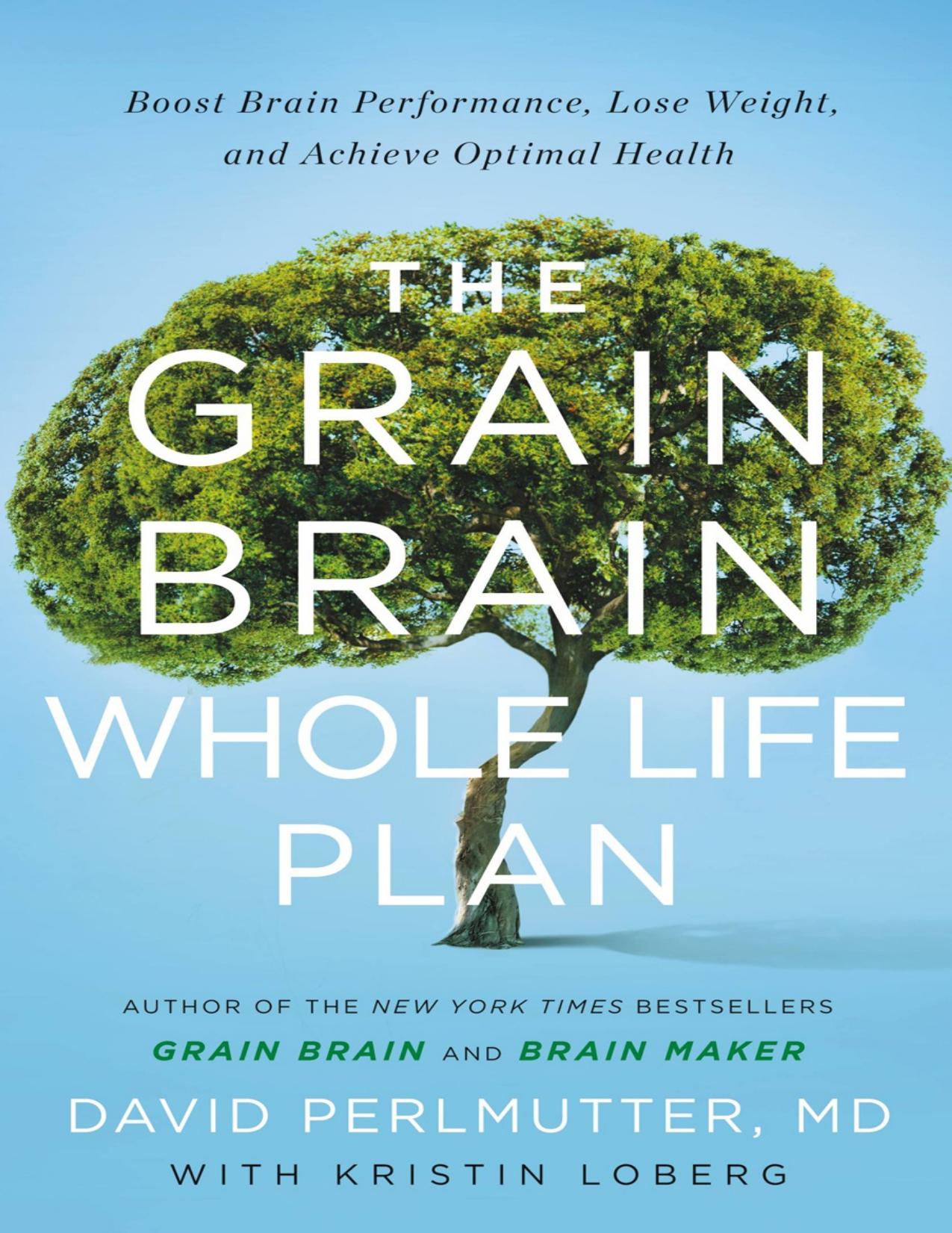
Author:David Perlmutter MD
Language: eng
Format: epub, pdf
Tags: Cooking / Health & Healing / Gluten-Free, Health & Fitness / Healthy Living, Health & Fitness / Diseases / Alzheimer’S & Dementia
Publisher: Little, Brown and Company
Published: 2016-11-14T16:00:00+00:00
MAKE ROOM FOR SLEEP
When was the last time you had a good night’s sleep? If it wasn’t last night, then you’re not alone. One in five of us has difficulty sleeping. I’ve written a lot about sleep in the past, as sleep disorders directly affect the brain, levels of inflammation, and risk for brain issues. The quality and amount of sleep you get have an astonishing impact on virtually every system in your body. Just a generation ago, we didn’t think much about the value of sleep other than to refresh the body somehow, like recharging batteries. Today, however, the study of sleep constitutes an entire field of medicine, which has revealed some breathtaking findings about sleep’s significance in human health.
Sleep can be described as a “diet of the mind.” It repairs and refreshes the brain and body on so many levels; it’s no wonder we spend roughly one-third of our life sleeping. Our pituitary gland, for instance, cannot begin to pump out growth hormone until we’re asleep. Natural anti-aging growth hormone does more than just stimulate cellular growth and proliferation; it also rejuvenates the immune system and lowers risk factors for heart attack, stroke, and osteoporosis. It even aids our ability to maintain an ideal weight, helping us to burn fat for fuel.
Indeed, getting quality sleep is a requirement for optimum well-being. The better you sleep on a regular basis, the lower your risk for all kinds of health problems. And, conversely, low-quality sleep has far-reaching adverse effects on the body and its functionality. Studies have convincingly shown that our sleep habits impact how much we eat, how fat (or thin) we get, how strong our immune systems are (and whether we can sail through the cold season), how creative and insightful we can be, how well we cope with stress, how fast we can think, and how well we remember things. Prolonged poor sleep habits are a factor in brain fog and memory loss, diabetes and obesity, cardiovascular disease, cancer, depression, and Alzheimer’s disease.
In fact, while much has been written about the fact that sleep disturbances are common in patients with Alzheimer’s, it was thought that the sleep issues were a consequence of the disease. Newer research, however, indicates that it may be the other way around: Disturbances of sleep may in fact enhance the way the brain makes beta-amyloid protein, a hallmark of Alzheimer’s disease. As the authors of a 2015 study state, paying attention to sleep issues and intervening when sleep is not fully restorative may be a way of modifying a risk factor for the future development of the disease.
Here are a few strategies to make the most out of sleep:
Download
The Grain Brain Whole Life Plan by David Perlmutter MD.pdf
This site does not store any files on its server. We only index and link to content provided by other sites. Please contact the content providers to delete copyright contents if any and email us, we'll remove relevant links or contents immediately.
The Bone Broth Miracle: How an Ancient Remedy Can Improve Health, Fight Aging, and Boost Beauty by Ariane Resnick(16615)
How to Be a Bawse: A Guide to Conquering Life by Lilly Singh(7492)
The Fat Loss Plan by Joe Wicks(4924)
The Ultimate Bodybuilding Cookbook by Kendall Lou Schmidt(3950)
The French Women Don't Get Fat Cookbook by Mireille Guiliano(3668)
A Jewish Baker's Pastry Secrets: Recipes from a New York Baking Legend for Strudel, Stollen, Danishes, Puff Pastry, and More by George Greenstein(3605)
Better Homes and Gardens New Cookbook by Better Homes & Gardens(3597)
Super Food Family Classics by Jamie Oliver(3424)
Dinner in an Instant by Melissa Clark(3166)
Bread Revolution by Peter Reinhart(3148)
Tom Kerridge's Dopamine Diet: My low-carb, stay-happy way to lose weight by Kerridge Tom(3114)
Body Love by Kelly LeVeque(3063)
Ottolenghi - The Cookbook by Yotam Ottolenghi(2951)
Flavor Flours by Alice Medrich(2870)
Tone Your Tummy Type by Denise Austin(2852)
The Fat Chance Cookbook by Robert H. Lustig(2838)
Oh She Glows Every Day by Angela Liddon(2782)
LL Cool J's Platinum 360 Diet and Lifestyle by LL Cool J(2741)
The Kitchen Counter Cooking School by Kathleen Flinn(2521)
